
Rotten Tomatoes - Movies & TV
FandangoEntertainment
4.41.27K Reviews
- Version
- 1.1.0
- Installs
- 100.00K
- Age Rating
- Teen
Screenshots
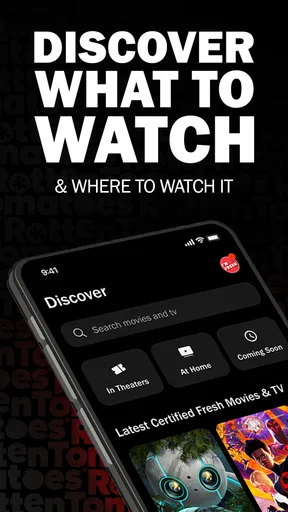
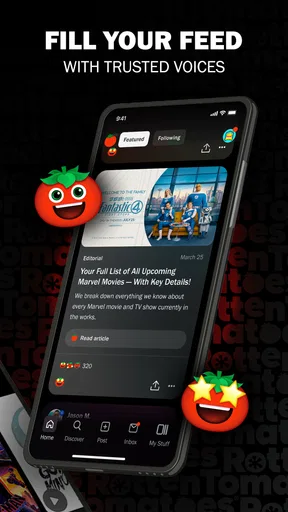
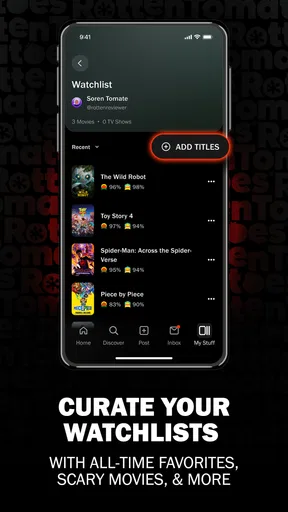
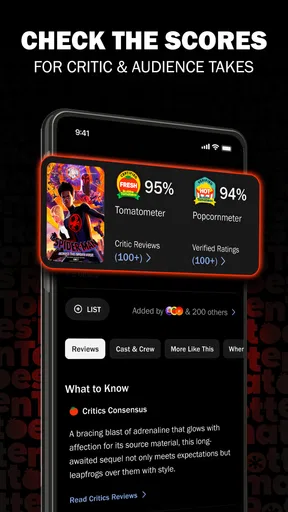
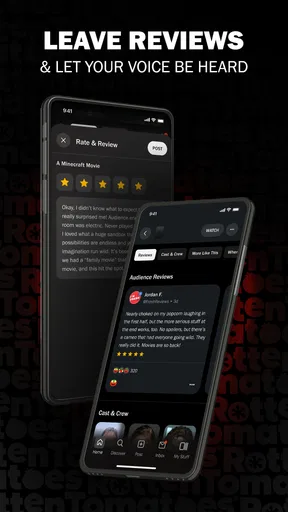
Our Review of Rotten Tomatoes - Movies & TV
 Analysis by Appyee
When I want to decide what to watch, I usually need more than a title and a poster. I want to know whether critics liked it, whether ordinary viewers agreed, what people are saying now, and whether there is any news worth noticing before I spend an evening on it. Rotten Tomatoes - Movies & TV is built around that decision, combining reviews, social discussion, and entertainment news in one free app from Fandango.
After using it as an entertainment companion rather than as a complete streaming service, I found its main strength easy to understand: it helps me narrow a crowded list of movies and television shows. It is most useful when I am undecided, when friends are recommending different things, or when I want a quick sense of the conversation around a release. It is less convincing if I expect one app to replace every streaming catalog, detailed film database, or personalized watch-history tool.
How I decide whether this app is worth keeping
My first test for an app like this is speed. If I have only a few minutes before choosing something, I do not want to read long articles or jump between several entertainment sites. I want a title search, a readable summary of its reception, and enough context to decide whether it deserves my time. This app fits that habit because its focus stays on movies and television rather than trying to become a general social network.
The second test is balance. A single score can be useful, but it can also hide disagreement. I pay attention to the difference between professional criticism and audience reaction, especially for comedy, horror, franchise films, and shows with a very specific style. The app is valuable when it gives me a starting point for that comparison instead of asking me to trust one number blindly.
The third test is whether the surrounding information helps me act. News is only useful if it changes what I might watch, revisit, or discuss. Social material can add personality and current reactions, but it can also become noisy. I found the best approach was to use the app for discovery and a quick confidence check, then move to the appropriate streaming or rental service when I had made a decision.
That distinction matters. This is an entertainment app, not a universal replacement for every service involved in watching something. Its job is to help answer “Is this worth considering?” rather than “Where can I watch everything, and how should I manage my entire library?” I would keep it installed for the first question and use other tools for the rest.
The information is most useful before pressing play
A realistic example is a Friday evening when my household cannot agree on a film. One person wants something new, another wants a dependable crowd-pleaser, and I am trying to avoid spending half an hour browsing. I can use the app to check the titles under discussion, compare the critical and audience response, and read enough current context to remove the weakest choices. That does not guarantee a perfect pick, but it turns an argument into a quicker decision.
I also like using it earlier in the week. If I hear about a new series at work, I can look it up immediately instead of relying on a vague memory of a trailer. Later, when I have time to watch, the title is easier to find again. This small workflow is more practical than saving random screenshots or opening several browser tabs.
For a group, the useful trick is to treat the app as a conversation starter rather than a judge. I might show the general reception, then read a little of the social reaction to see whether the disagreement is about pacing, tone, performances, or expectations. That helps avoid a common mistake: rejecting a title because of a score when the real issue is simply that it targets a different audience.
What the app brings together
The store summary describes the experience through reviews, social content, and news, and that combination is the reason I would choose it over a plain list of scores. Reviews offer the critical angle, social material shows how viewers are responding, and news keeps the app relevant between viewing decisions. Each part serves a different moment in my routine.
Reviews are best when I want a broad quality signal. Social content is more useful when I want to understand the mood around a title or see whether a release has become a talking point. News helps when I am following a franchise, a returning show, or a developing entertainment story. I do not give all three equal weight, and that is an important part of using the app well.
My practical tip is to look for agreement and disagreement rather than chasing the highest score. When critics and viewers line up, the decision is often simpler. When they split, I slow down and ask whether the title might appeal to me specifically. A divided response can be more informative than an enthusiastic but shallow consensus.
Why the Fandango connection matters to my experience
Fandango is the developer, and that gives the app a clear place in the movie-going ecosystem. Even when I am not planning a cinema trip, the brand is associated with the point where interest turns into a viewing decision. That makes this app feel more focused than a general entertainment news reader.
Still, I would not install it expecting a complete replacement for every Fandango-related activity or for a streaming platform. The value I get here is editorial and social context. If my immediate goal is simply to start a film, I still need the service that actually provides it. Keeping those roles separate makes the app easier to judge fairly.
Small habits that make the app more useful
I found three habits especially helpful. First, I check a title before reading detailed reactions elsewhere. That gives me a neutral starting point and reduces the chance that the loudest online opinion will shape my view too early. Second, I revisit a title after watching it, because comparing my reaction with the broader conversation is more interesting than reading everything in advance. Third, I use the news area selectively, following stories connected to the kinds of films and shows I already care about.
Another useful trade-off is spoiler control through timing. I prefer to read general reception before watching, then return for deeper discussion afterward. Social conversation can reveal more than I want to know if I browse carelessly, so I avoid treating every post or headline as pre-viewing material. The app works better when I decide whether I am in discovery mode or discussion mode.
I also recommend separating “I want something good” from “I want something that fits tonight.” A highly praised drama may be a poor choice when I want a light comedy. The app can inform the choice, but it cannot replace knowing my own mood. Its scores and conversations are evidence, not instructions.
Where it wins, where other tools fit better, and what switching involves
I’d judge this app by whether it still helps once the first curiosity wears off: does it make choosing a movie or show easier often enough to justify another icon on my phone? I’ll also weigh when a streaming finder, film database, or direct group chat is a better fit, and how to try those alternatives without disrupting a routine that already works.
The strongest case for keeping it installed
The clearest advantage is concentration. Instead of opening a review site for critics, a social platform for reactions, and a news source for updates, I can begin in one entertainment-focused app. That saves attention, especially when I am comparing several titles. The experience is also free, which removes the usual hesitation about keeping a secondary discovery tool on my phone.
Its audience response is another meaningful strength. Professional reviews can explain craft and execution, but everyday viewers reveal whether a title is connecting beyond the review desk. I find that contrast particularly helpful for popular releases, adaptations, and shows that inspire strong loyalty. The app gives me a better basis for deciding whether a disagreement is personal taste or a wider warning.
The current public response suggests that many users find the experience worthwhile: it carries an average rating of 4.4 from around 4.6 thousand ratings, with about 1.3 thousand written reviews. It has also passed 100 thousand installs. I read those figures as encouraging rather than conclusive; they show meaningful adoption, but they do not guarantee that every section will suit my habits.
The app is free and carries a Teen content rating, so it is easy to try for people who want entertainment information without committing to a subscription. The age guidance is still worth taking seriously because movie and television discussion can involve mature themes, strong language, or spoilers. I would not hand it to a young child simply because the download costs nothing.
Where a different category may be the better choice
If my main goal is discovering what is available on the services I already pay for, a streaming-search tool is usually more direct. Those tools are designed around availability, filters, and playback, while this app is designed around reception and entertainment conversation. I would choose the former when the question is “What can I watch right now?” and this app when the question is “Should I bother with this title?”
If I want a deep film archive, release history, cast connections, or a personal catalog, a dedicated movie database may suit me better. This app’s appeal is its immediacy, not necessarily the feeling of maintaining a private research library. Film enthusiasts who track every credit may find a specialist database more satisfying.
Likewise, a social platform may be better for direct conversation with friends or niche fan communities. The social element here helps me understand public reaction, but it should not be confused with a private group chat or a carefully moderated discussion space. I would use a messaging app for planning a movie night and this one for checking the wider entertainment temperature.
News-focused readers may also prefer a publication app with longer reporting and stronger topic controls. The news component is useful as part of a movie-and-TV decision workflow, but I would not make it my only source for serious entertainment journalism. The trade-off is convenience: this app keeps news close to reviews and reactions, while a specialist source may offer more depth.
The friction of changing from familiar alternatives
Switching is easy if I currently browse entertainment sites manually, because the app gives me a single place to begin. The harder adjustment is psychological: I have to stop expecting one score to settle every choice. The most useful experience comes from comparing signals, checking the context, and remembering that a popular opinion can still be a poor match for my taste.
There is also a workflow cost if I already have a trusted watchlist elsewhere. I would not move everything immediately. I would use this app alongside my existing service for a week or two, checking whether its reviews, social discussion, and news actually improve my choices. If it only duplicates information I already consult, there is little reason to make it the center of my routine.
The current version is 1.1.0 and supports devices running Android 8.0 or later. That makes compatibility a straightforward check before installing, particularly on an older phone. I would also remember that the app is relatively recent, having been released on October 9, 2025, so my expectations would be practical: I would judge it by how well its present experience helps me decide what to watch, rather than assuming it already covers every possible entertainment workflow.
Who should use it and who should skip it
I recommend it to casual movie watchers, television fans who like to compare opinions, people who often choose something in a group, and anyone who wants reviews and entertainment news close together. It is especially handy for the person who keeps hearing about new releases but does not want to research each one across several websites.
I would skip it if I want a pure streaming launcher, a comprehensive personal media manager, or a private social space for friends. I would also skip it if I dislike ratings and public reactions in general. The app’s central value comes from seeing how a title is being discussed, so someone who prefers to choose entirely from trailers, actors, or personal recommendations may not gain much.
My final recommendation is positive, with a clear boundary: install it as a decision guide, not as your entire entertainment setup. The free price makes experimenting painless, and the combination of reviews, social reaction, and news gives me more context than a basic title browser. I would use it before choosing, after watching, and when following entertainment stories that affect what I may see next.
For me, the best reason to keep it is not that it removes uncertainty. No app can do that when taste is personal. Its real benefit is that it makes uncertainty easier to examine: I can see where critics and viewers agree, notice when the conversation is divided, and decide whether the title fits my mood and plans. That is a modest job, but it is a useful one.
My bottom line: Rotten Tomatoes - Movies & TV is worth trying if you want a free, focused way to research movies and television before committing your time. I would pair it with a streaming availability tool and, when needed, a deeper database or news source. Used that way, it earns its place on my phone without pretending to be something it is not.
Because it is rated Teen, I would also treat it as an app for older viewers and teenagers rather than a child-oriented recommendation tool. For the right audience, its compact mix of critical opinion, viewer conversation, and news is practical. For everyone else, the decision is simple: if your biggest entertainment problem is choosing what deserves your attention, this app is a sensible addition.
Verdict
Strengths of Rotten Tomatoes - Movies & TV
- Quickly shows critic and audience scores for movies and TV shows.
- Useful reviews and ratings help users decide what to watch.
- Includes trailers, photos, cast details, and entertainment news.
- Personalized recommendations make discovering new titles easier.
- Covers a broad catalog of current and older films and series.
Limitations of Rotten Tomatoes - Movies & TV
- Some features and content may vary by region or country.
- Streaming availability can be incomplete or occasionally outdated.
- The app may display frequent advertisements and promotional content.
- Scores can oversimplify complex opinions about a movie or series.
- Requires an internet connection for most browsing and media features.
Other Releases by Fandango
View All
Fandango - Buy Movie Tickets
Entertainment4.7
Similar Picks in This Category
View All
Google Play Games
Google LLC3.9

Netflix
Netflix, Inc.4.8

YouTube Kids
Google LLC4.2

Disney+
Disney4.4

Prime Video
Amazon Mobile LLC4.7

Steam
Valve Corporation3.2
Frequently Asked Questions
What is Rotten Tomatoes – Movies & TV used for?
Rotten Tomatoes – Movies & TV is designed to help you discover, evaluate, and keep track of movies and television shows. It provides critic and audience scores, reviews, trailers, cast information, release details, and personalized recommendations. Before downloading, remember that it is primarily an information and discovery app; availability for actually watching a title depends on your region and the supported streaming services.
What do the Tomatometer and audience scores mean?
The Tomatometer represents the percentage of approved professional critics who gave a movie or show a positive review, while the audience score reflects ratings from verified or general users, depending on the title and platform rules. These scores are useful starting points, but they do not guarantee that you will enjoy a production. Reading individual reviews and checking the rating details can provide better context.
Can I watch movies and TV shows directly in the app?
Rotten Tomatoes – Movies & TV is mainly a review, rating, and entertainment-discovery service rather than a complete streaming platform. It may show trailers, clips, and information about where a title could be available, but full movies and episodes are generally provided by separate streaming, rental, or digital purchase services. Availability, pricing, and supported providers can vary significantly by country.
Does the app require an account, and can I personalize my experience?
You can usually browse many movie and television listings without creating an account, which is convenient if you only want to check scores or reviews. However, signing in may provide access to additional features such as saving titles, creating watchlists, rating content, or receiving more personalized recommendations. Account options and available features may change with app updates or regional differences.
Is Rotten Tomatoes – Movies & TV suitable for families and children?
The app can be useful for families because it displays age ratings, genres, critic opinions, audience reactions, and content information for many titles. Nevertheless, it is not a complete parental-control solution, and some reviews, trailers, advertisements, or linked services may contain mature material. Parents should check each movie or show’s official rating and content warnings before allowing children to watch it.
